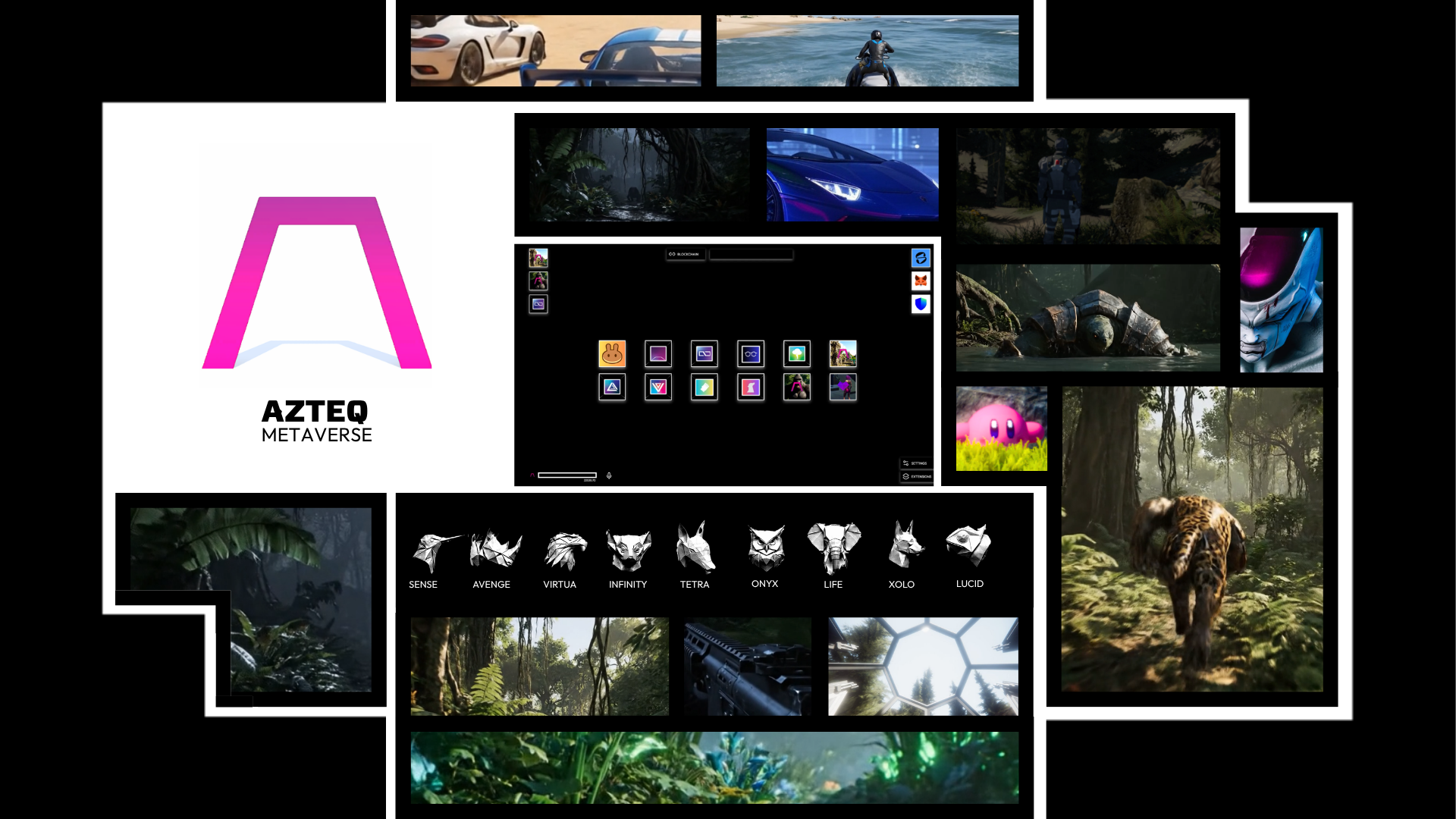
The One Metaverse delivers permissionless spatial computing directly to any WebGPU-enabled device. An execution layer where people, web services, autonomous agents, and global enterprise operations can interact. Users can socialize, conduct commerce in native Bitcoin, manage industrial facilities, or deploy digital assets with absolute self-custody: free from platform rents, artificial trade restrictions, or vendor lock-in. Powered by open-source infrastructure, Bitcoin reserve liquidity, and Move resource management, the One Metaverse brings digital sovereignty to everyone, everywhere.
The modern digital economy feels structurally broken. Central banks inflate away human labor, legacy smart contract platforms lose billions to EVM re-entrancy exploits, and corporate metaverse platforms lock users inside walled gardens. Solving this requires a disciplined convergence of three distinct, uncompromising primitives: Bitcoin, Move, and Metaverse.
flowchart TD
    subgraph Money ["BITCOIN (Money 2.0)"]
        M1["Absolute Digital Scarcity"]
        M2["Lightning Micro-Settlement"]
    end

    subgraph Safety ["MOVE (Resource Safety)"]
        S1["Linear Type Asset Logic"]
        S2["Parallel Object Execution"]
    end

    subgraph UX ["METAVERSE (Spatial Reality)"]
        U1["Zero-Download WebGPU UX"]
        U2["Agile RWA Tokenization"]
    end

    Money -->|Sovereign Reserve Liquidity| Convergence["THE ONE METAVERSE"]
    Safety -->|Unstealable Asset State| Convergence
    UX -->|Spatial Human Interface| Convergence

    classDef mStyle fill:#fff3e0,stroke:#e65100,color:#bf360c;
    classDef sStyle fill:#e8f5e9,stroke:#2e7d32,color:#1b5e20;
    classDef uStyle fill:#e3f2fd,stroke:#1565c0,color:#0d47a1;
    classDef cStyle fill:#f3e5f5,stroke:#7b1fa2,color:#4a148c;

    class Money mStyle;
    class Safety sStyle;
    class UX uStyle;
    class Convergence cStyle;
Bitcoin is pristine, unforgeable monetary truth. It does not need to be bloated with complex smart contract state or unnecessary transaction data on its base layer. Bitcoin fulfills a single objective perfectly: unalterable scarcity and ultimate settlement. Through native Lightning payment channels and trustless PSBT atomic swaps, Bitcoin provides hard liquidity to the spatial economy without sacrificing base-layer decentralization.
Legacy Web3 treated digital items as numerical values inside a shared spreadsheet, resulting in endless smart contract exploits. Move treats assets as physical resources protected by linear type safety. Digital items cannot be duplicated, spoofed, or implicitly deleted from memory. Move provides the mathematical foundation for managing complex dynamic items, estate deeds, and commercial logic with complete resource safety.
The metaverse is the natural 3D interface for human cognition. Tokenization puts real-world non-fungible assets—physical inventory, real estate, energy yields, and event access—to work as dynamic virtual goods. Real-world property becomes liquid, tradeable, and productively deployed within interactive 3D environments.
Most projects pollute technology by forcing bad compromises: clogging the Bitcoin base layer, relying on vulnerable cross-chain bridges, or forcing multi-gigabyte native installs onto users.
The One Metaverse unifies these systems cleanly without contaminating their core functions. Bitcoin remains pure reserve money. Move handles state logic with linear safety. WebGPU delivers instant browser rendering. No half-baked code, no custodial proxies, and no platform gatekeepers.
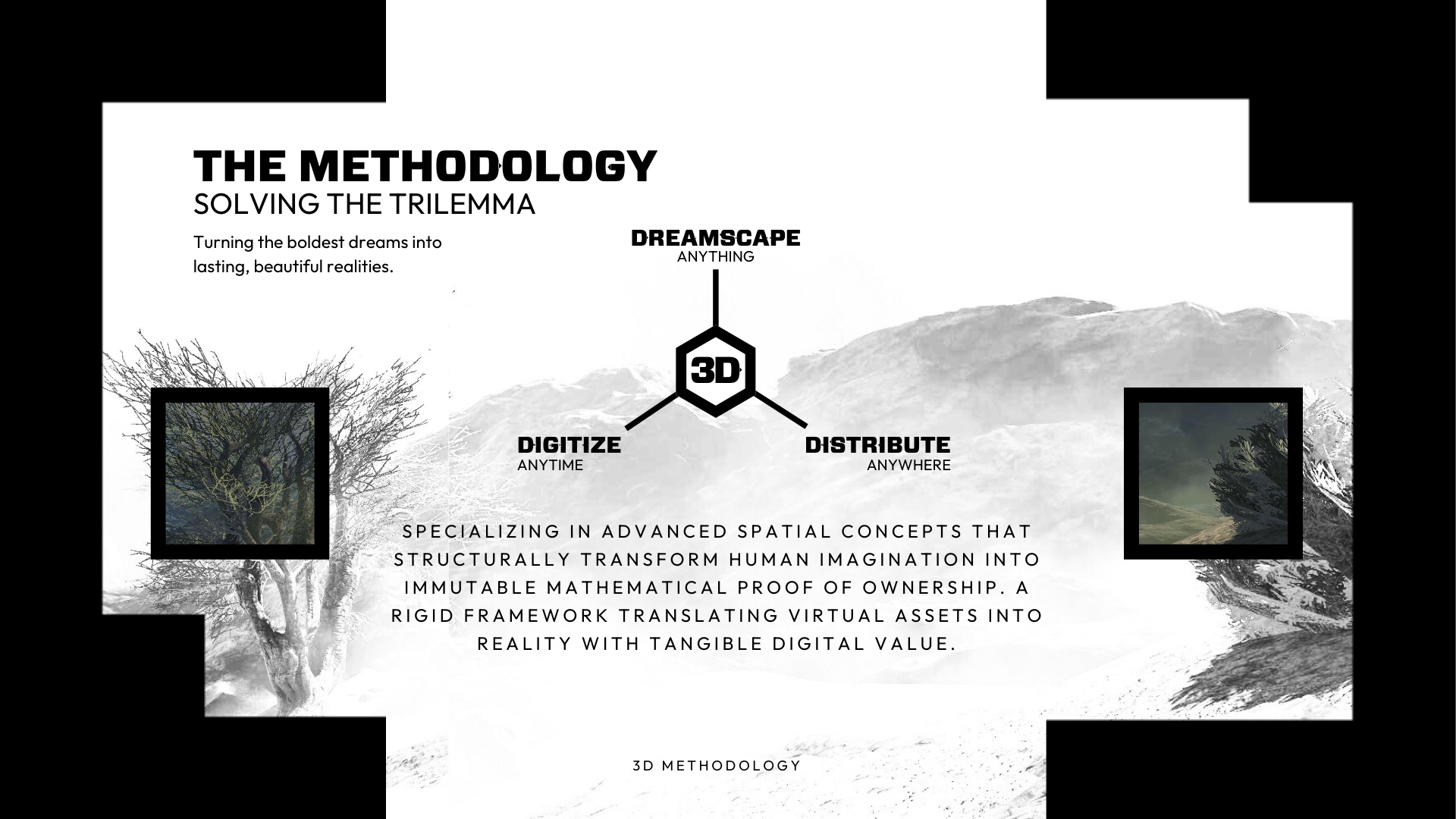
Sovereign spatial reality cannot be built on corporate promises. Centralized platforms require users to trust that terms of service will not change, digital assets will not be confiscated, and servers will stay online. Trust in human institutions fails over time. The AZTEQ vision replaces administrative discretion with mathematical proof, absolute self-custody, and hardware-level resource constraints.
To achieve scale without relying on monolithic server farms or forcing gigabytes of downloads onto users, we developed the 3-D Methodology: Dreamscape, Digitize, and Distribute.
flowchart TD
    subgraph D1 ["DREAMSCAPE (Shape Anything)"]
        direction LR
        A1["Spatial Concept / Seed"] --> A2["Onyx Procedural Engine"] --> A3["SDF & TSL Mesh Extraction"]
    end

    subgraph D2 ["DIGITIZE (Containerize Anytime)"]
        direction LR
        B1["Move Resource Definition"] --> B2["512KB DKU Allocation"] --> B3["DDA: Core + Mutable State"]
    end

    subgraph D3 ["DISTRIBUTE (Share Anywhere)"]
        direction LR
        C1["64 Regional Edge Zones"] --> C2["Parameter Seed Streaming"] --> C3["Browser WebGPU Execution"]
    end

    D1 --> D2 --> D3

    classDef d1Style fill:#e3f2fd,stroke:#1565c0,color:#0d47a1;
    classDef d2Style fill:#e8f5e9,stroke:#2e7d32,color:#1b5e20;
    classDef d3Style fill:#f3e5f5,stroke:#7b1fa2,color:#4a148c;

    class D1 d1Style;
    class D2 d2Style;
    class D3 d3Style;
Dreamscape removes the traditional 3D development bottleneck. Classical pipelines require manual polygon modeling, texture baking, skeletal rigging, and compiling heavy binary bundles. This creates a massive entry barrier and locks creation behind specialized software studios.
Dreamscape replaces static asset files with procedural generation. Using Signed Distance Functions (SDFs) and Three Shading Language (TSL) node materials compiled via WebGPU compute shaders, Dreamscape generates geometry, collision hulls, and surface shaders dynamically inside client Video RAM. Network transmission is reduced to pure mathematical parameters, cutting asset load times from seconds to milliseconds.
Visual geometry without on-chain proof is merely an ephemeral image. Digitize binds 3D creations directly to the Avenge Layer-1 blockchain, converting spatial creations into Dynamic Digital Assets (DDAs) stored inside 512KB Data Keeping Units (DKUs).
Move’s linear type safety mathematically guarantees that DDAs cannot be copied, spoofed, or silently dropped from ledger state. Asset ownership is enforced by compiler rules, not platform support desks.
Digital property must move freely across network boundaries. Distribute streams lightweight procedural seeds across 64 global regional edge zones directly into WebGPU browser memory.
| Operational Metric | Legacy Asset Distribution | 3-D Methodology (Distribute) |
|---|---|---|
| Delivery Model | Monolithic Executable Installers | Real-Time Parameter Streaming |
| Initial Download Overhead | 20GB – 60GB Compiled Bundles | 15MB Initial Seed & WASM Engine |
| Execution Venue | Native Client / App Store Approval | Open Web Browser (WebGPU/WASM) |
| Bandwidth Consumption | High Continuous Data Usage | <5 Mbps Sustained State Sync |
By decoupling 3D rendering from network payload sizes, Distribute cuts bandwidth overhead by over 90%, transforming the open web into a universal spatial computing platform.
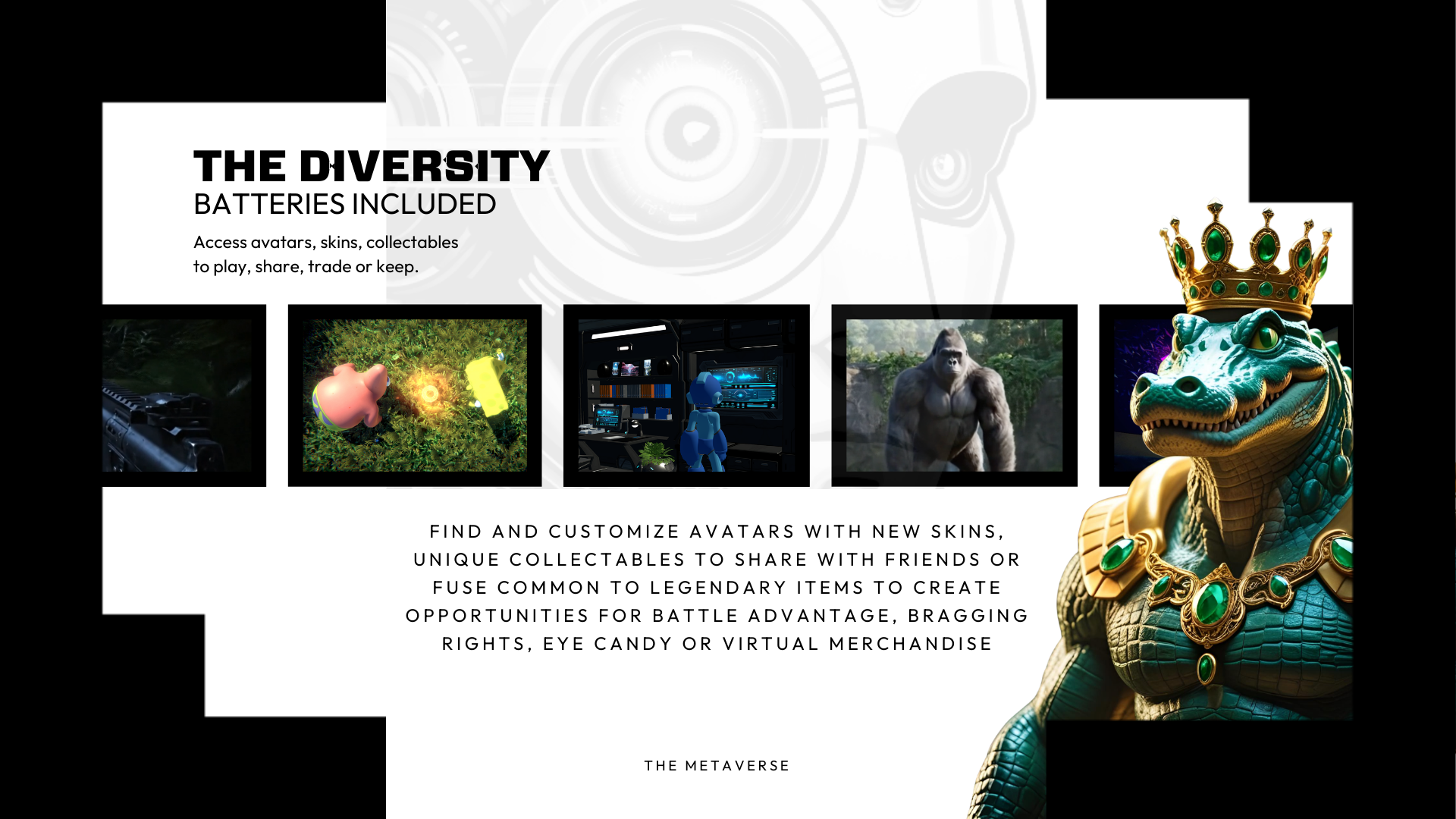
In the One Metaverse, an avatar is not a decorative cosmetic puppet. It is a sovereign spatial identity for human participants and an embodied visual interface for autonomous artificial intelligence. By combining Move resource safety with real-time WebGPU rendering, avatars unify social presence, enterprise collaboration, and remote industrial operations into a single spatial execution environment.
flowchart TD
    subgraph Identity ["SPATIAL IDENTITY CONTAINERS"]
        H["Human Participant
(Sovereign Key Identity)"]
        A["Onyx AI Agent
(Embodied Machine Identity)"]
    end

    subgraph Interface ["CROSS-DOMAIN SPATIAL EXECUTION"]
        S1["Social Reality & Gaming
(Life Districts & Xolo Arenas)"]
        S2["Enterprise Collaboration
(Spatial Boardrooms & Live Sales)"]
        S3["Industrial Factory Twins
(Remote Presence & Spatial HUDs)"]
    end

    H --> Interface
    A --> Interface

    classDef idStyle fill:#e3f2fd,stroke:#1565c0,color:#0d47a1;
    classDef intStyle fill:#e8f5e9,stroke:#2e7d32,color:#1b5e20;

    class H,A idStyle;
    class S1,S2,S3 intStyle;
The download wall is a broken legacy model. Forcing users to download 50-gigabyte binaries, execute native installers with administrative privileges, and wait for corporate app store approvals creates unacceptable friction. It destroys onboarding, locks users into closed hardware silos, and hands control to platform landlords.
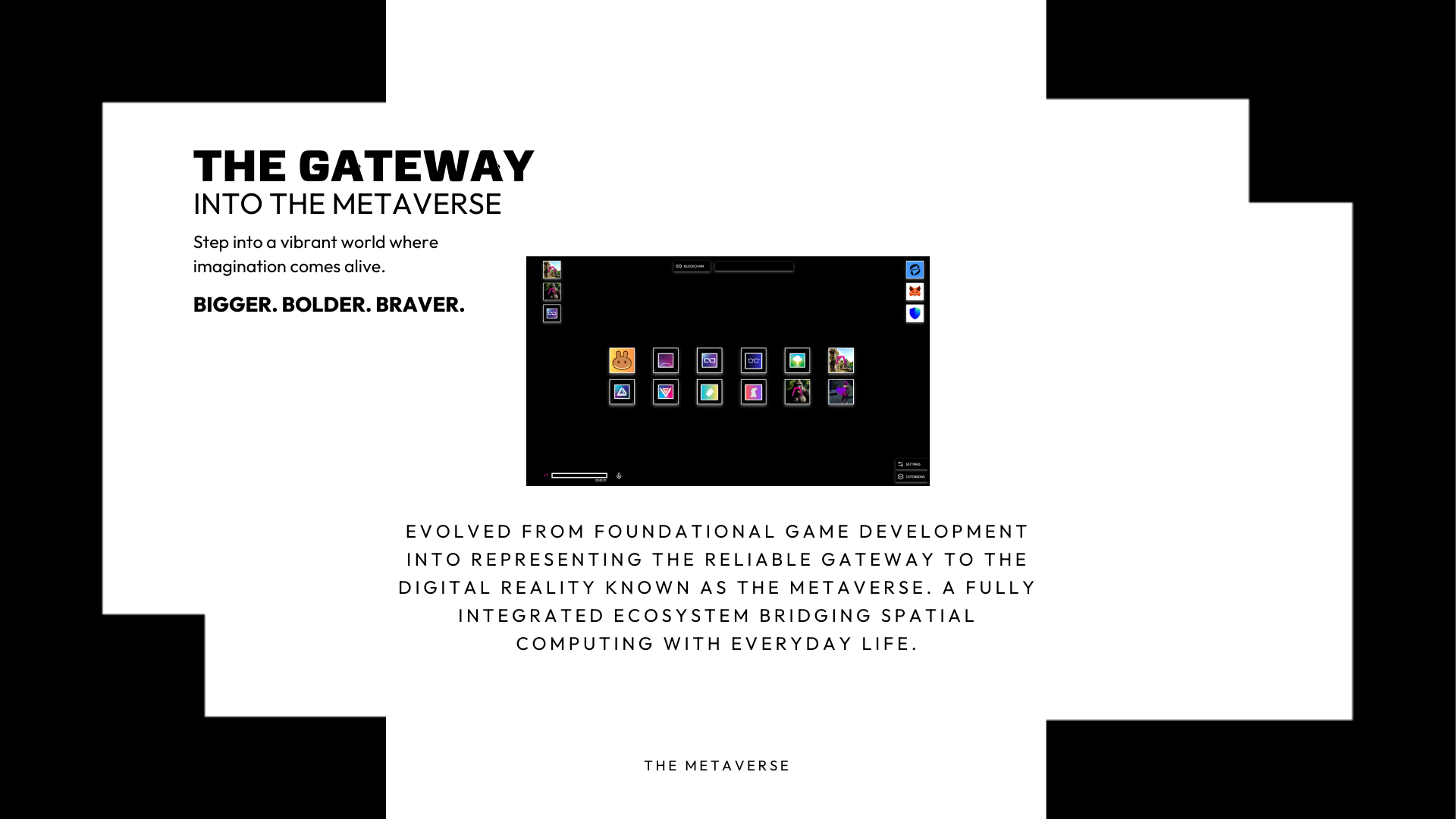
Virtua eliminates the download wall completely. It is a browser-native 3D operating shell running directly inside any standard web browser using WebGPU hardware acceleration.
flowchart LR
    subgraph Old ["OLD MODEL (High Friction & Gatekeepers)"]
        direction LR
        A1["App Store / Launcher"] --> A2["50GB Download"] --> A3["Local Native Install"]
    end

    subgraph Virtua ["VIRTUA GATEWAY (Direct Access)"]
        direction LR
        B1["Web Browser URL"] --> B2["WebGPU WASM Engine"] --> B3["Local GPU Hardware Execution"]
    end

    classDef oldStyle fill:#ffebee,stroke:#c62828,color:#b71c1c;
    classDef newStyle fill:#e8f5e9,stroke:#2e7d32,color:#1b5e20;

    class Old oldStyle;
    class Virtua newStyle;
Virtua converts standard web browsers into high-performance spatial operating systems. Instead of streaming heavy, lag-prone video feeds from expensive cloud servers or requiring native software installations, Virtua interfaces directly with local GPU hardware via WebGPU.
When a user opens a spatial web address, the network streams lightweight mathematical parameter sets rather than massive uncompressed 3D mesh files. Your browser compiles WebAssembly (WASM) modules that talk directly to native graphics drivers—Metal on Apple hardware, Vulkan on Android and Linux, and Direct3D 12 on Windows. Your local graphics card evaluates the instructions and renders the spatial environment locally in real time.
flowchart TD
    A["User Inputs URL in Standard Browser"] --> B["Streams Parameter Seeds & WASM Modules"]
    B --> C["WebGPU Command Buffers Encoded"]
    C --> D1["Graphics Queue: Real-Time 3D Shader Rendering"]
    C --> D2["Compute Queue: Parallel Avenge Chain State Checks"]
    D1 --> E["Direct Local Hardware Execution (60-120 FPS)"]
    D2 --> E
If a device supports a WebGPU-compliant browser, it runs the One Metaverse natively. Access requires zero platform permissions, zero executable downloads, and zero middleman approvals.
| Device Category | Target Operating System | Graphics API Target | Onboarding Execution |
|---|---|---|---|
| Desktop / Workstation | Windows, macOS, Linux | Direct3D 12, Metal, Vulkan | Browser URL (3-Sec Load) |
| Mobile Devices | iOS (Safari), Android (Chrome) | WebGPU Mobile Shader Passes | Browser URL (3-Sec Load) |
| Spatial Computing | visionOS, OpenXR Devices | WebGPU Immersive Viewport | Browser URL (3-Sec Load) |
Virtua acts as your personal 3D workspace and spatial control deck. Instead of navigating flat 2D file folders, your digital belongings exist in physical space. You inspect equipment, modify Dynamic Digital Assets (DDAs) in 3D, arrange inventory on physical workspace shelves, and execute transactions from a unified self-custody interface.
Virtua functions as a client-side security shield. Every 3D extension, spatial widget, and external connector executes inside an isolated WebAssembly memory sandbox. Executable scripts are strictly barred from accessing OS-level file systems, harvesting key memory, or executing unauthorized calls. You explore, trade, and build with complete operational sovereignty.
A sovereign spatial reality requires an uncompromising economic and communication foundation. If digital property rights are secured on-chain, but user messaging, identity, or financial settlement rely on centralized databases or custodial intermediaries, the entire system remains vulnerable to administrative censorship and counterparty risk.
The Subsystem layer decouples high-frequency spatial operations from monetary reservation and transport, anchoring value directly to Bitcoin, the Lightning Network, and NOSTR.
flowchart TD
    subgraph Reserve ["BASE MONETARY RESERVE"]
        BTC["Bitcoin Mainnet (secp256k1 / Taproot Assets / SPV)"]
    end

    subgraph Settlement ["INSTANT LIQUIDITY LAYER"]
        LN["Lightning Network (HTLC Channels / Sub-Cent Satoshis)"]
    end

    subgraph Transport ["DECENTRALIZED TRANSPORT & M2M"]
        NOSTR["NOSTR Relays (Schnorr / NIP-57 Zaps / Identity)"]
        WL["Wavelength Protocol (M2M Micropayments / Aegis ZK-Circuit)"]
    end

    BTC --> LN
    LN --> NOSTR
    LN --> WL

    classDef reserveStyle fill:#fff3e0,stroke:#e65100,color:#bf360c;
    classDef lnStyle fill:#fffde7,stroke:#fbc02d,color:#f57f17;
    classDef transStyle fill:#e1f5fe,stroke:#0288d1,color:#01579b;

    class BTC reserveStyle;
    class LN lnStyle;
    class NOSTR,WL transStyle;
Bitcoin is the reserve asset of the One Metaverse. We reject custodial bridges and synthetic wrapped tokens, which introduce systemic counterparty risk and smart contract honeypots.
Virtua incorporates client-side Simplified Payment Verification (SPV) capabilities, validating Merkle proofs against block headers directly in browser memory. High-value property, corporate deeds, and reserve packages are anchored to Bitcoin UTXOs via Taproot Assets (BIP 340/341/342), inheriting the base-layer proof-of-work security of the mainnet.
High-frequency spatial actions cannot wait ten minutes for base-layer block confirmations. The Lightning Network provides instant, horizontally scalable value transfer:
NOSTR (Notes and Other Stuff Transmitted by Relays) handles decentralized identity, authentication, and social messaging. User identity is defined by a secp256k1 key pair—sharing identical cryptographic primitives with Bitcoin.
Messages and spatial events are signed offline and broadcast to an open pool of independent WebSocket relays. NIP-57 Zaps attach Lightning invoices directly to signed events, enabling instant, peer-to-peer social tipping and venue entry payments without payment processors.
Wavelength handles high-frequency, autonomous agent-to-agent (A2A) micro-transactions. Powered by Lightning HTLCs and the Aegis Circuit (a zero-knowledge privacy layer), Wavelength allows software agents to negotiate, execute, and settle API and compute tasks in milliseconds without exposing node identities or task payloads on public ledgers.
High-frequency spatial state transitions cannot run on sequential, account-based blockchains. Legacy execution environments like the EVM process transactions in a single global queue, creating severe state contention, gas volatility, and memory locks.
The Subsystem execution layer leverages Cedra’s parallel object-centric architecture, the Move programming language, and an integrated Subsystem DEX to execute 180,000 transactions per second (TPS) with sub-0.6-second cryptographic finality.
flowchart TD
    subgraph EVM ["LEGACY EVM (Sequential / Ledger-Centric)"]
        direction LR
        E1["Tx Queue"] --> E2["Global State Lock"] --> E3["Sequential Execution"]
    end

    subgraph Move ["MOVE / CEDRA (Parallel / Object-Centric)"]
        direction LR
        M1["Tx Mempool"] --> M2["Static Access Engine"]
        M2 --> M3["Core 1: Object A Update"]
        M2 --> M4["Core 2: Object B Update"]
        M2 --> M5["Core 3: Object C Update"]
    end

    classDef evmStyle fill:#ffebee,stroke:#c62828,color:#b71c1c;
    classDef moveStyle fill:#e8f5e9,stroke:#2e7d32,color:#1b5e20;

    class EVM evmStyle;
    class Move moveStyle;
Cedra replaces account-based balance mappings with discrete, typed objects. Every asset, smart contract, and token instance exists as an independent object possessing a unique identifier, an incrementing version number, and explicit ownership metadata.
Because transactions explicitly declare their target objects prior to execution, the Avenge Virtual Machine (AVM) determines memory access overlap before running code:
Move defines digital items as Resources rather than numbers inside a smart contract dictionary. Resources inherit strict linear logic properties enforced by the compiler:
key and store abilities, while copy and drop abilities are explicitly omitted.Trading primitives operate natively within the AVM rather than as third-party dApps, unifying liquidity across all Move resources and Taproot Assets.
flowchart LR
    A["Encrypted Tx Payload (DKG Public Key)"] --> B["Blind DAG Mempool Sequencing"]
    B --> C["Validator Consensus (67% Threshold)"]
    C --> D["Threshold Decryption & Execution"]

    classDef shogunStyle fill:#f3e5f5,stroke:#7b1fa2,color:#4a148c;
    class A,B,C,D shogunStyle;
To eliminate frontrunning and Maximal Extractable Value (MEV) exploits, the Dex incorporates the Shogun Protocol. Swap orders are threshold-encrypted locally using a Distributed Key Generation (DKG) public key. Validators sequence the encrypted ciphertexts in the DAG mempool without visibility into trade parameters. Once the sequence is locked, threshold decryption shares are published, executing trades in exact committed order and rendering sandwich attacks mathematically impossible.
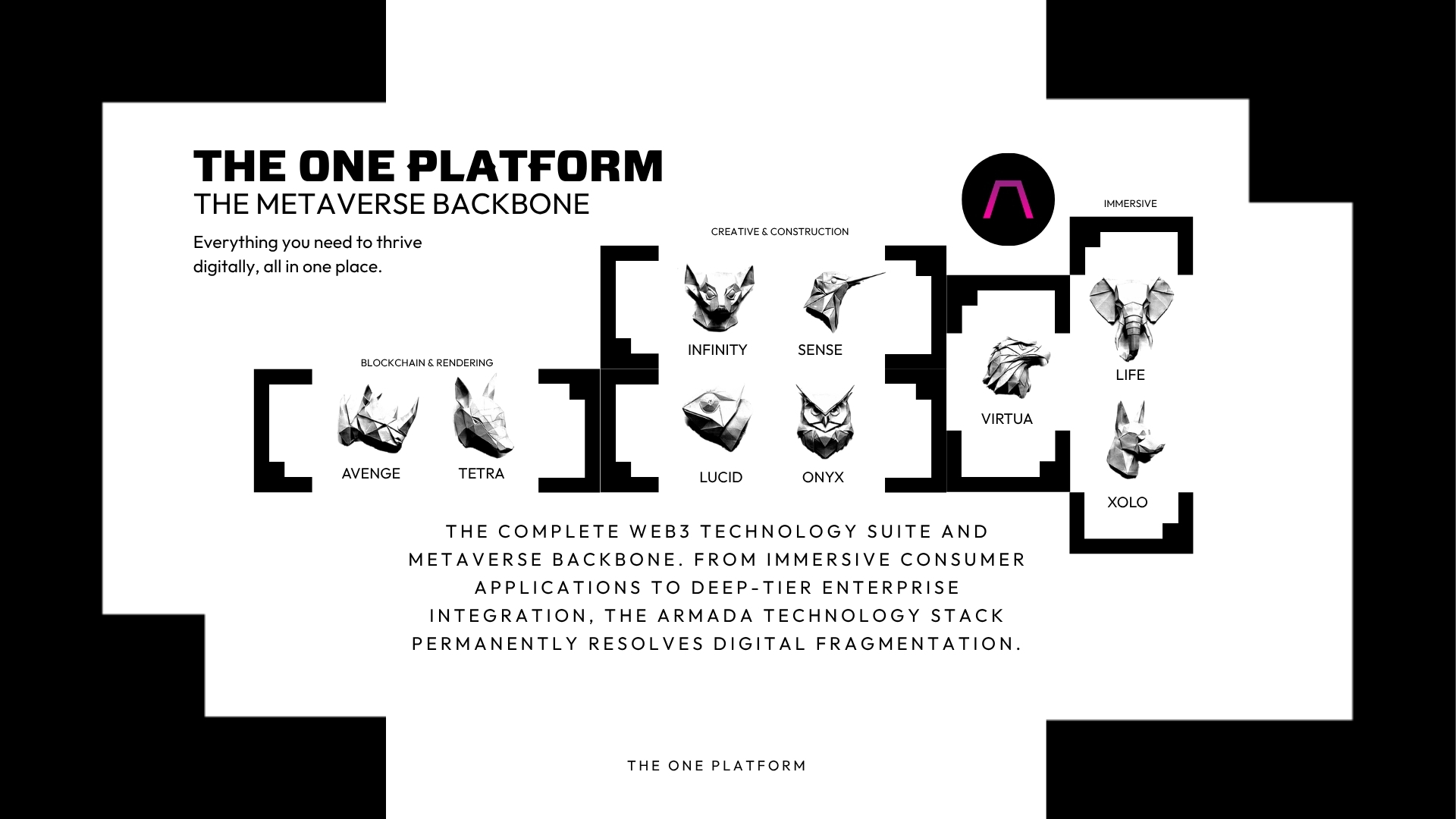
The Subsystem provides raw ledger throughput, reserve liquidity, and decentralized transport. However, developers and users require a unified compilation and execution layer to interact with these primitives. The Armada Stack serves as the visual and execution engine of the One Metaverse, bridging user interface viewports directly to the underlying Move state tree and Lightning payment channels.
flowchart TD
    subgraph Construction ["CREATIVE & INTEGRATION LAYER"]
        SENSE["Sense (Natural-Language Compiler)"]
        LUCID["Lucid (XR Spatial Logic Builder)"]
        INF["Infinity (1,000+ Universal API Adapters)"]
    end

    subgraph Core ["EXECUTION & RENDERING LAYER"]
        TETRA["Tetra Web3D Engine (WebGPU Render / AWV Parallel Validator)"]
        AVENGE["Avenge Layer-1 (Move Resource State Tree / ABF Consensus)"]
    end

    Construction --> TETRA
    TETRA <--> AVENGE

    classDef constStyle fill:#e3f2fd,stroke:#1565c0,color:#0d47a1;
    classDef coreStyle fill:#e8f5e9,stroke:#2e7d32,color:#1b5e20;

    class SENSE,LUCID,INF constStyle;
    class TETRA,AVENGE coreStyle;
Avenge records on-chain resource truth, while Tetra renders the spatial viewport and validates ledger states.
Sense removes smart contract development barriers by compiling plain human instructions directly into Move bytecode on Avenge.
Lucid is a visual logic builder engineered for desktop viewports and immersive XR headsets. Creators step into 3D scenes and wire visual event nodes directly onto objects:
Trigger Nodes (proximity/clicks), Condition Nodes (DDA/balance checks), and Action Nodes (animations/Move transfers).Infinity provides over 1,000 pre-built adapters bridging external Web2 databases, e-commerce backends (Shopify, SAP, Salesforce, webMethods), and REST/GraphQL APIs directly into Virtua displays and Life venues. Incoming payloads are sanitized inside memory sandboxes, normalized into binary 3D parameters, and cryptographically signed by enclave oracle nodes.
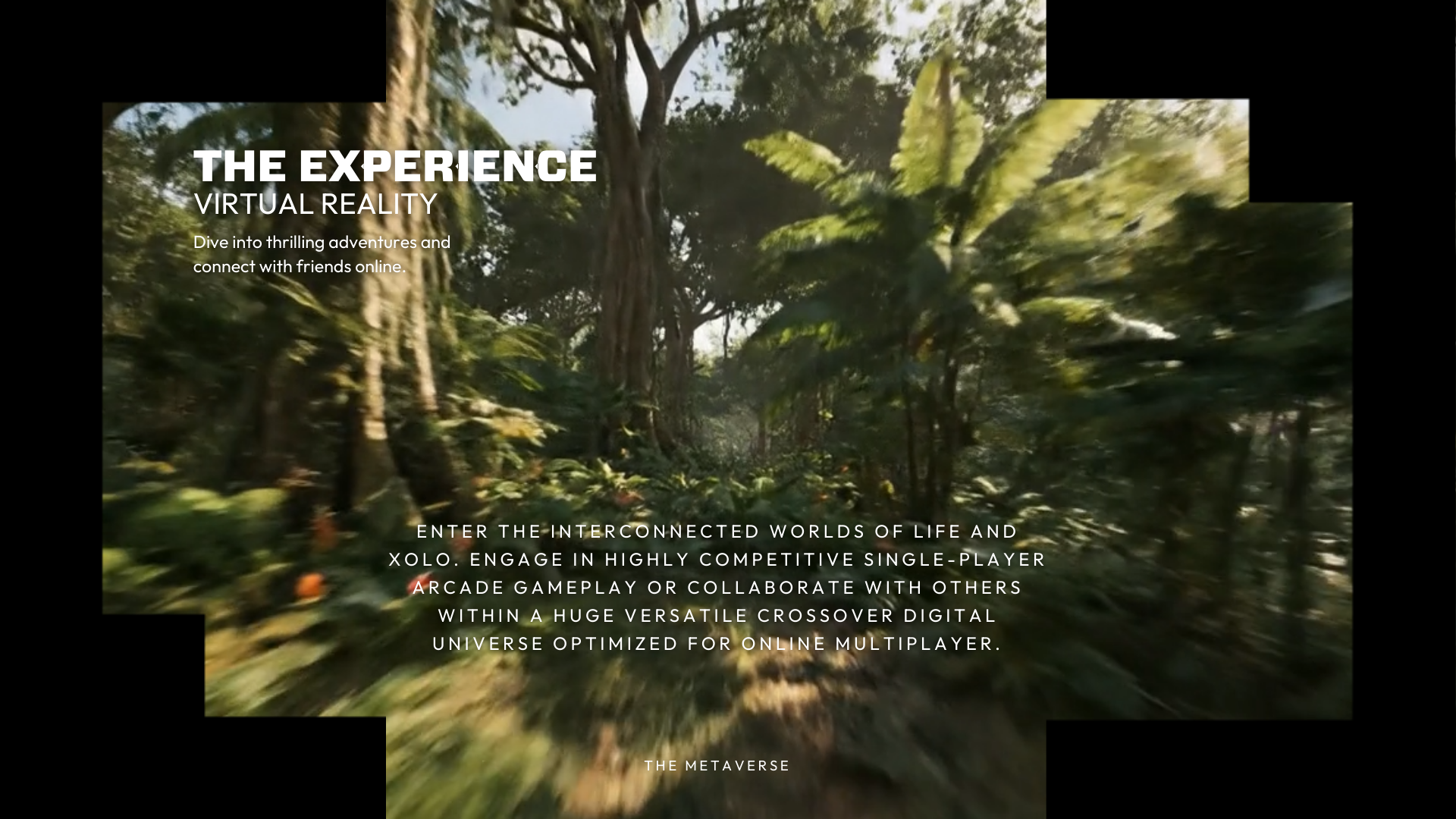
The One Metaverse executes spatial reality across three primary application environments running on Avenge and Tetra: Life (persistent open world), Xolo (skill-based arcade arena), and Virtua (3D web workspace).
flowchart TD
    subgraph VirtuaOS ["VIRTUA (Spatial Web Desktop)"]
        V1["3D Workspace & DKU Extensions (1 AZTEQ)"]
        V2["Onyx AI Companion Mode & Key Shell"]
    end

    subgraph Life ["LIFE (Open-World Reality)"]
        L1["12 Ecological Districts & 25ha Life Titles"]
        L2["Organic / Soil / Bedrock Layer Scoring"]
        L3["NOSTR Footfall-Driven Staking Yield"]
    end

    subgraph Xolo ["XOLO (Competitive Arcade)"]
        X1["Skill-Based Loops & Move Escrow Wagers"]
        X2["Edge SLM Telemetry Referees"]
        X3["Immutable On-Chain High-Score Registers"]
    end

    VirtuaOS --> Life
    VirtuaOS --> Xolo

    classDef virtuaStyle fill:#e3f2fd,stroke:#1565c0,color:#0d47a1;
    classDef lifeStyle fill:#e8f5e9,stroke:#2e7d32,color:#1b5e20;
    classDef xoloStyle fill:#f3e5f5,stroke:#7b1fa2,color:#4a148c;

    class VirtuaOS virtuaStyle;
    class Life lifeStyle;
    class Xolo xoloStyle;
Life is a 3D open-world environment divided into 12 distinct geographical and ecological districts (e.g., Pelecano, Pantera, Mocinno, Heloderm).
Xolo is an arcade environment built for fast-paced, high-stakes competition without participation trophies.
Virtua OS runs in parallel as a standalone 3D desktop shell, isolating asset management and workspace logic from active game worlds.
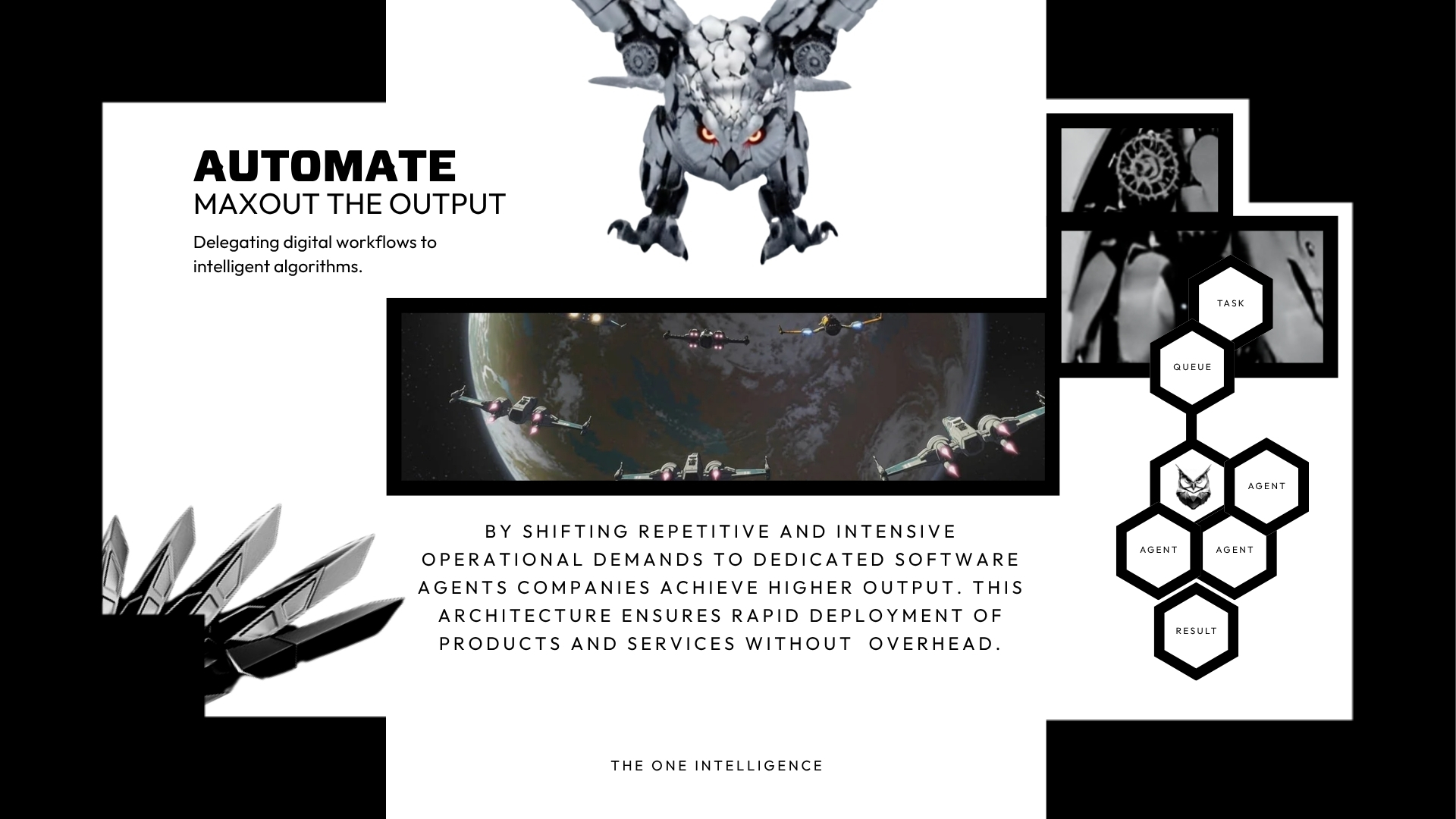
Managing a persistent, high-concurrency spatial reality requires continuous operational coordination. Traditional virtual platforms rely on manual administrative scripts, static NPC behavior trees, and centralized live-ops teams. This creates single points of failure, administrative latency, and predictable environment loops.
Onyx replaces manual scripting with a hybrid artificial intelligence framework composed of Small Language Models (SLMs), Large Language Models (LLMs), and autonomous agent swarms.
flowchart TD
    subgraph OnyxCore ["ONYX HYBRID AI CORE"]
        direction TD
        ORCH["Onyx Task Queue & Orchestrator"]
    end

    subgraph Tier1 ["TIER 1: EDGE SLMs (1B - 3B Params)"]
        direction LR
        S1["Local WebGPU / 64 Edge Zones"] --> S2["15-50ms Response Latency"] --> S3["Tactical FSMs & Physics"]
    end

    subgraph Tier2 ["TIER 2: REGIONAL LLMs (High Params)"]
        direction LR
        L1["Validator Data Hubs"] --> L2["Context Matrix Grounding"] --> L3["Narrative & Sense Compiler"]
    end

    subgraph Swarm ["AUTONOMOUS AGENT SWARM"]
        direction LR
        A1["Environment / Logistics / Economy Agents"] --> A2["Move Key Identities & Wavelength Wallets"]
    end

    ORCH --> Tier1
    ORCH --> Tier2
    ORCH --> Swarm

    classDef coreStyle fill:#e3f2fd,stroke:#1565c0,color:#0d47a1;
    classDef t1Style fill:#e8f5e9,stroke:#2e7d32,color:#1b5e20;
    classDef t2Style fill:#fff3e0,stroke:#e65100,color:#bf360c;
    classDef swarmStyle fill:#f3e5f5,stroke:#7b1fa2,color:#4a148c;

    class OnyxCore coreStyle;
    class Tier1 t1Style;
    class Tier2 t2Style;
    class Swarm swarmStyle;
To balance deep reasoning with real-time frame budget constraints, Onyx divides artificial intelligence processing into two execution tiers:
Repetitive operational logistics are dispatched to autonomous software agents. Every agent receives a cryptographic identity derived from Avenge, operates within scoped domain boundaries (Environment, Logistics, Economy), and holds a self-custody wallet integrated with the Wavelength protocol.
Onyx enables businesses to deploy private, PaaS-hosted spatial enterprise realities. Connected to over 2,000 vendor APIs via Infinity, these commercial spaces handle live inventory tracking and Web3 checkout channels automatically. Operations are distributed across 64 global regions with active failover, ensuring continuous uptime without central server reliance.
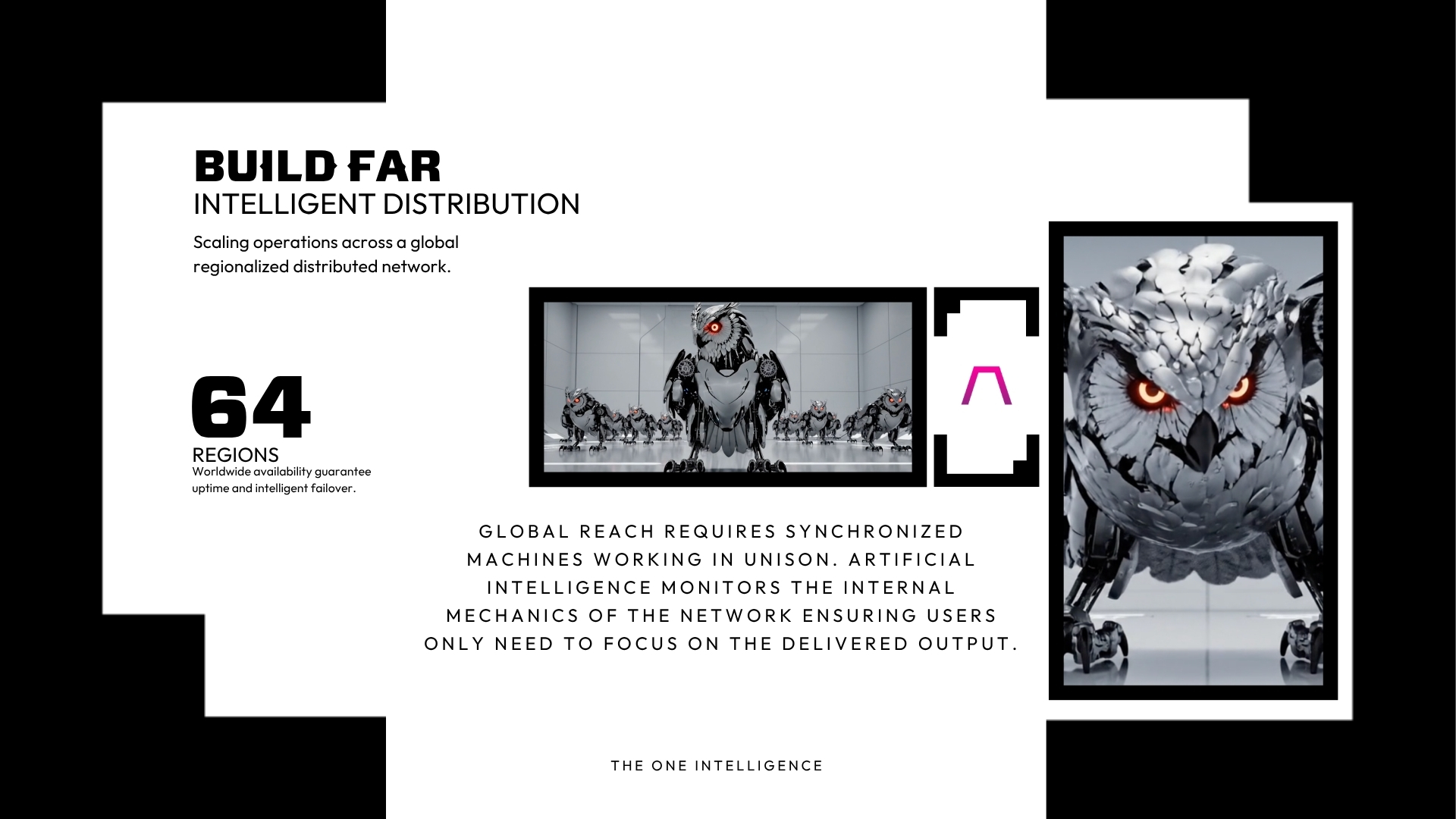
Standard artificial intelligence models in virtual environments operate with acute amnesia. Once a session ends, the neural context is wiped, forcing non-player characters and AI services to restart interactions from zero. Furthermore, rendering photorealistic environments in real time typically requires massive server-side compute that degrades under high user concurrency.
The One Intelligence solves both limitations by using Data Keeping Units (DKUs) as permanent neural state vaults, combined with a decentralized GPU compute mesh that executes 3D Gaussian Splatting and iterative background rendering.
flowchart TD
    subgraph Memory ["PERSISTENT NEURAL STATE (DKU Vaults)"]
        DKU["512KB On-Chain DKU Stashes"] -->|Serialized Memory Vectors| ONYX["Onyx Engine Context Matrix"]
    end

    subgraph Compute ["DISTRIBUTED VISUAL ACCELERATION"]
        ONYX -->|Iterative Compute Tasks| GPU["Idle WebGPU Validator Mesh"]
        GPU -->|3D Gaussian Splatting| SCENE["Radiance Field Reconstruction"]
        GPU -->|Neural Texture Baking| BG["Pre-Rendered Volumetric Backgrounds"]
    end

    SCENE --> VIEW["High-Fidelity Browser Viewport (120 FPS)"]
    BG --> VIEW

    classDef memStyle fill:#e3f2fd,stroke:#1565c0,color:#0d47a1;
    classDef compStyle fill:#e8f5e9,stroke:#2e7d32,color:#1b5e20;
    classDef viewStyle fill:#f3e5f5,stroke:#7b1fa2,color:#4a148c;

    class DKU,ONYX memStyle;
    class GPU,SCENE,BG compStyle;
    class VIEW viewStyle;
Onyx AI agents do not rely on centralized cloud databases to remember user preferences, historical trades, or spatial strategies. Long-term memory is serialized into compact vector stashes housed directly inside 512KB Data Keeping Units (DKUs) on the Avenge blockchain.
Achieving photorealistic spatial fidelity inside a standard web browser requires moving beyond brute-force polygon rendering. The One Metaverse distributes visual enhancement tasks across idle WebGPU validator nodes in the background.
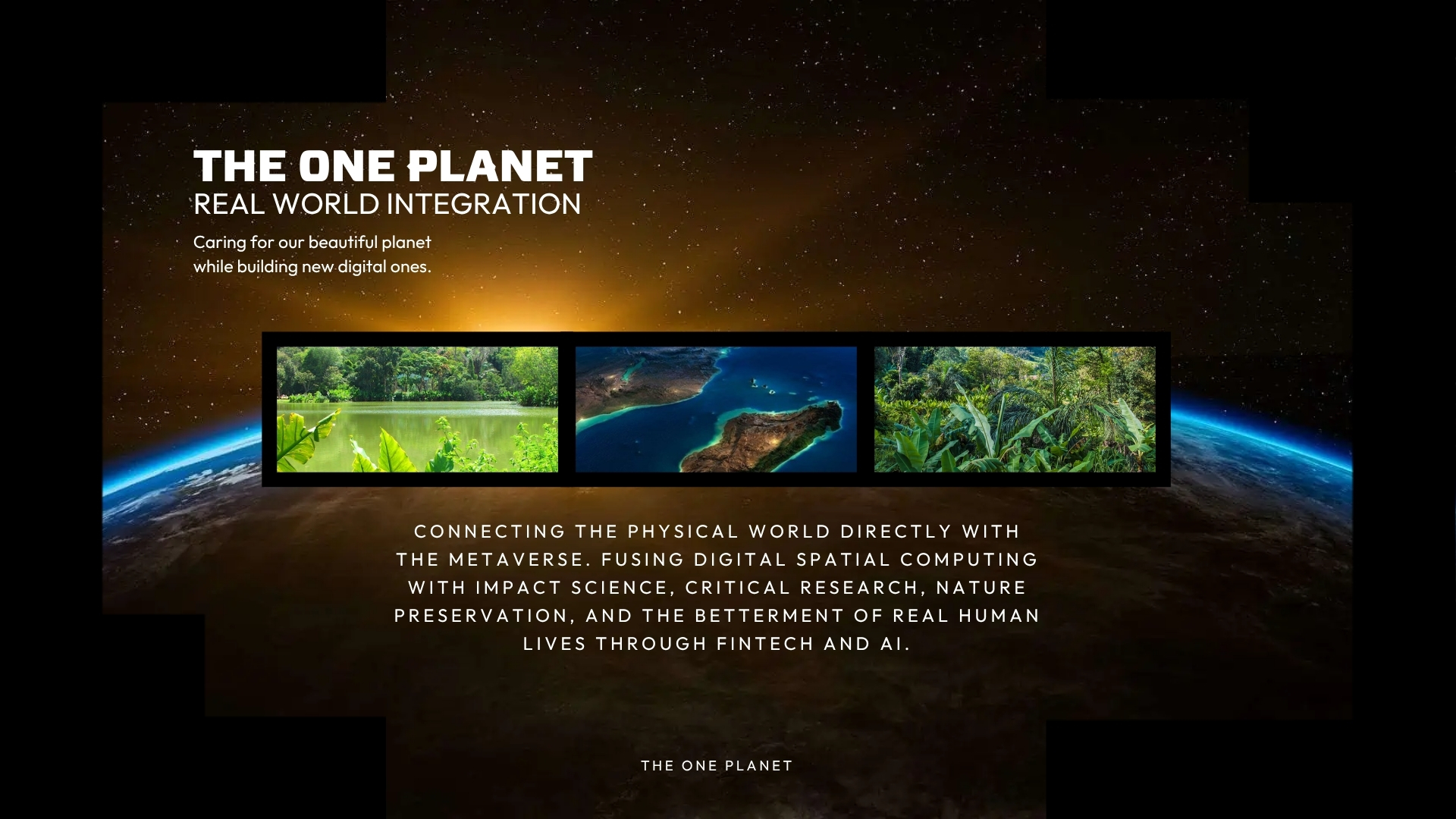
Digital reality must not operate in isolation from the physical world. The One Planet initiative establishes a verifiable bridge between spatial computing, physical infrastructure, real-world asset (RWA) tokenization, and ecological defense.
Spatial GPU compute clusters and edge validation nodes require continuous, zero-carbon electrical energy. One Planet deploys 400MW Small Modular Reactors (SMRs) and high-temperature refuse gasification facilities in developing industrial hubs, such as Madagascar:
The One Planet tokenization links physical objects directly to Move resources on Avenge via tamper-evident Near Field Communication (NFC) or RFID seals.
Wilderness reserves, rainforests, and marine sanctuaries are scanned using high-resolution satellite LiDAR, indexing physical land down to individual square meters on Avenge. Users sponsor specific square meters via monthly Lightning micro-payments—routing 100% of funds directly to local payrolls and biological defense teams with zero administrative deductions.
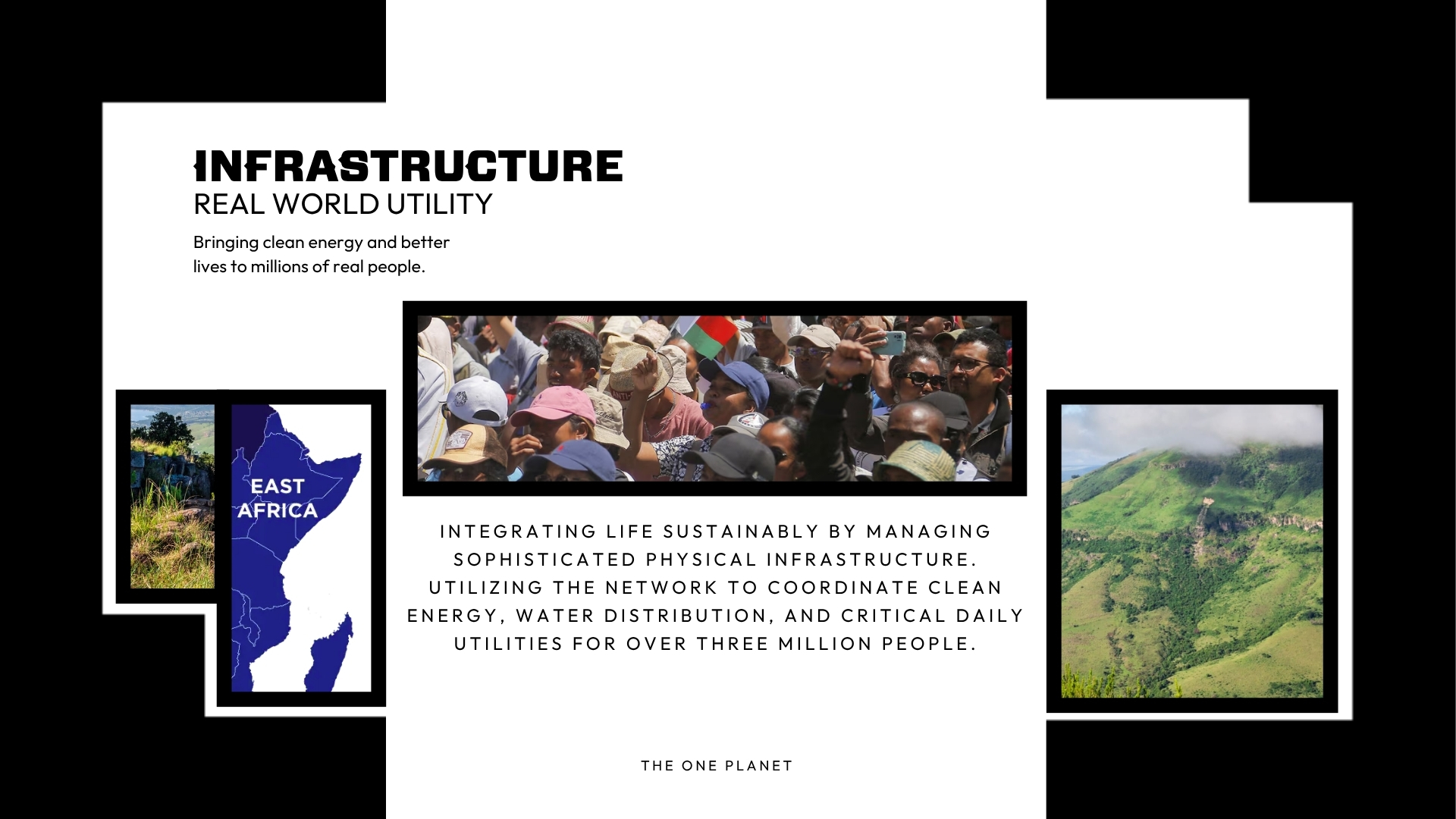
Physical independence requires monetary and operational autonomy. To demonstrate that sovereign spatial computing and hard-money mechanics operate in the physical world, AZTEQ Metaverse has acquired 7,000 hectares of land in Madagascar to construct fully autonomous, "fiat-free" economic zones.
flowchart TD
    subgraph Zone ["7,000-HECTARE FIAT-FREE TERRITORY (Madagascar)"]
        direction LR
        Z1["Physical Land Allocation"] --> Z2["Autonomous Governance Framework"]
    end

    subgraph Commerce ["COMMERCE & POINT OF SALE"]
        direction LR
        P1["AZTEQ One PoS Terminals"] --> P2["Lightning Network HTLCs"] --> P3["Instant Satoshi Settlement"]
    end

    subgraph Infra ["ARQ UTILITY & MODULAR HOUSING"]
        direction LR
        U1["Modular Off-Grid Homes"] --> U2["ARQ Green Energy Microgrid"] --> U3["ARQ Potable Water Systems"]
    end

    Zone --> Commerce
    Commerce --> Infra

    classDef zoneStyle fill:#e8f5e9,stroke:#2e7d32,color:#1b5e20;
    classDef commStyle fill:#fff3e0,stroke:#e65100,color:#bf360c;
    classDef infraStyle fill:#e3f2fd,stroke:#1565c0,color:#0d47a1;

    class Zone zoneStyle;
    class Commerce commStyle;
    class Infra infraStyle;
The Madagascar economic zone operates completely independent of central bank monetary rails and legacy merchant acquirers. It functions as a living laboratory for physical circular Bitcoin economies:
Living infrastructure within the zone utilizes high-efficiency, pre-fabricated modular home units which can be ordered in Virtua and synchronized with physical digital deeds on Avenge.
The zones expands its physical service layer iteratively. As community occupancy grows, additional modules—including autonomous agriculture, decentralized medical clinics, and logistical supply hubs—are deployed. Every service facility operates on-chain via Move resource contracts, settling operational maintenance and supply procurement autonomously using Wavelength M2M payment channels.
The internal economy of the One Metaverse requires a predictable computational unit that executes high-frequency VM operations without clogging the Bitcoin base layer or exposing internal state updates to fiat inflation. AZTEQ One is engineered as a pure utility coin on the Avenge blockchain, operating as the functional fuel for smart contracts, AI compute, and spatial storage.
flowchart TD
    subgraph Reserve ["SOVEREIGN MONETARY ANCHOR"]
        BTC["Bitcoin (Money 2.0 / Satoshis)"]
    end

    subgraph Peg ["FIXED LIQUIDITY CONVERSION RATE"]
        RATE["1 AZTEQ One = 5,000 Satoshis (Deposit / Withdrawal)"]
    end

    subgraph Internal ["AVENGE UTILITY EXECUTION LAYER"]
        DDA["DDA & DKU Creation (Reliable Bitcoin Value)"]
        YIELD["Compound Staking Yield (Automatic Holding Benefits)"]
        AI["Onyx AI Agent Compute Fuel"]
        PRIV["Native Shielded Transactions"]
    end

    BTC <-->|Fixed 5,000 Sats Rate| RATE
    RATE <--> Internal

    classDef btcStyle fill:#fff3e0,stroke:#e65100,color:#bf360c;
    classDef rateStyle fill:#fffde7,stroke:#fbc02d,color:#f57f17;
    classDef intStyle fill:#e8f5e9,stroke:#2e7d32,color:#1b5e20;

    class BTC btcStyle;
    class RATE rateStyle;
    class DDA,YIELD,AI,PRIV intStyle;
AZTEQ One is not a fiat stablecoin. It rejects unbacked central bank currencies and avoids arbitrary USD pegs, recognizing Bitcoin as Money 2.0.
Deposit and withdrawal entry points anchor AZTEQ One at a fixed conversion rate of 5,000 satoshis (). This deterministic conversion provides a stable internal unit of account while keeping the underlying reserve liquidity strictly denominated in hard Bitcoin.
By fixing conversion mechanics to 5,000 satoshis, creating Dynamic Digital Assets (DDAs) and provisioning 512KB Data Keeping Units (DKUs) on Avenge inherits a predictable, hard-money cost baseline. Creators and enterprises can price digital property, land development, and service fees with mathematical certainty benchmarked directly against Bitcoin.
Holding active AZTEQ One balances generates automated compounding yield. Users do not need to navigate complex third-party lockup schemes; simply holding the utility asset inside a self-custody wallet unlocks compounding returns powered by district footfall fees and network usage burns.
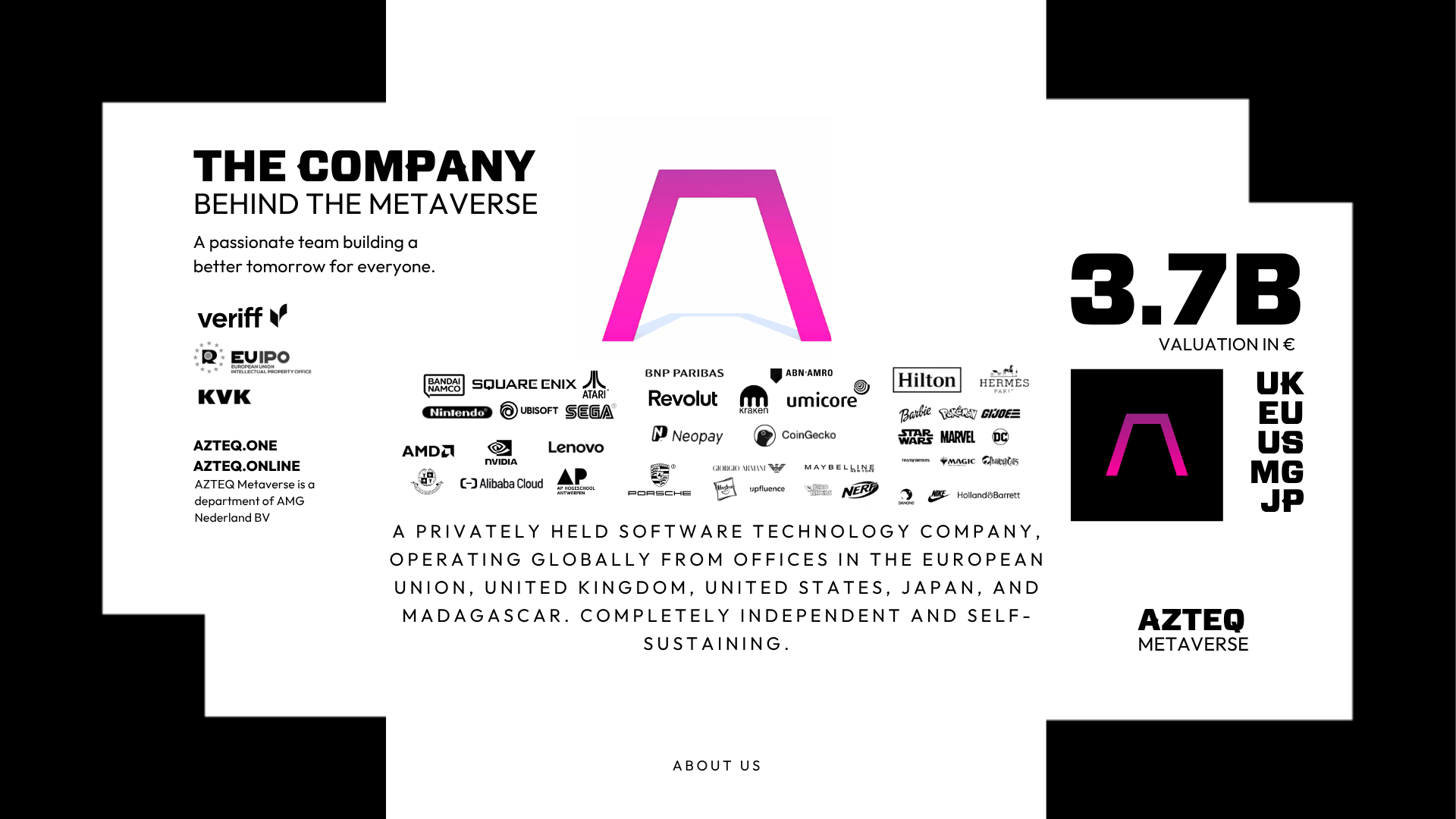
Sovereign infrastructure requires a sovereign balance sheet. AZTEQ Metaverse operates without venture capital debt, public token launchpads, or administrative platform dependence. We build spatial reality, fintech, and distributed ledger systems backed by hard reserves, institutional trade experience, and strict regulatory compliance.
AZTEQ Metaverse operates as a specialized division of AMG Nederland BV, a privately held technology company founded in 2008 registered in the Netherlands.
The executive leadership team brings decades of combined institutional execution across high-volume international commodity trading, Web3 financial architecture, and large-scale game engine development. By uniting physical asset reserves with parallel Move execution, the team delivers sovereign spatial reality built for permanent global scale.
The One Metaverse was not designed to conform to the existing Web2 or Web3 status quo. It was built to break it.
By eliminating the download wall, removing server gatekeepers, and replacing monolithic installers with browser-native WebGPU rendering, spatial computing becomes immediately accessible to anyone with an internet connection. By combining Move's resource-oriented logic on Avenge with the speed and horizontal scale of Bitcoin's Lightning Network, we deliver a global digital economy that honors absolute self-custody while delivering sub-second performance.
AZTEQ Metaverse operates as a specialized software division of AMG Nederland BV (Heikampweg 3, 5249JX Rosmalen, The Netherlands).
This technical appendix provides a centralized reference matrix of key execution parameters, macroeconomic limits, and physical infrastructure specifications across the One Metaverse architecture.
pie title AZTEQ One Fixed Supply Allocation (116M Capped Total)
    "Ecosystem & Staking Rewards" : 85000000
    "Circulating Supply" : 21000000
    "Multi-Sig Locked Treasury" : 9000000
| Metric / Parameter | Value / Specification | Architecture Function |
|---|---|---|
| Peak Throughput | 180,000 TPS | Parallel static access object-centric execution |
| Transaction Finality | <0.6 Seconds | Dual-track consensus (Fast Path & ABF DAG) |
| Smart Contract VM | Avenge Move VM | Linear type resource safety; zero re-entrancy |
| Storage Unit (DKU) | 512 Kilobytes | Fixed 1 AZTEQ allocation fee; folder chaining |
| Consensus Model | ABF (Avenge Byzantine Frustum) | Separates data dissemination from DAG ordering |
| Metric / Parameter | Value / Specification | Economic Function |
|---|---|---|
| AZTEQ One Total Supply | 116,000,000 (Capped) | VM gas, DKU allocations, DDA updates |
| Circulating Supply | 21,000,000 AZTEQ | Initial market liquidity and operational pools |
| Treasury Reserve | 9,000,000 AZTEQ | Multi-sig locked ecosystem stability reserve |
| Reserve Backing | 14,000 BTC / 5,000 kg Gold | Sovereign balance sheet asset reserve |
| Reserve Valuation | $1.6B Raw / $3.7B Enterprise | Corporate valuation (AMG Nederland BV) |
| System Component | Parameter / Output | Deployment Specification |
|---|---|---|
| Edge Server Regions | 64 Global Server Zones | Pinned DKU caches; sub-second latency routing |
| Base Power Generation | 400 MW per Compact SMR Unit | Zero-carbon baseload + waste gasification |
| Power Distribution | 60% Compute / 40% Microgrid | AWV validator nodes + community power (3M+ people) |
| Spatial Real Estate | 500m x 500m (25 Hectares) | Life Title deeds; Organic/Soil/Bedrock scoring |
https://azteq.onehttps://virtua.azteq.online