TL;DR: AZTEQ proposes a three-dimensional world that runs in a normal web browser. Bitcoin would provide its monetary base, while a separate blockchain called Avenge would record digital property and activity. The plan gives users, creators, developers and businesses several ways to take part, with AZTEQ One paying for network use. The white paper explains the design in depth, but it does not provide the evidence, launch schedule or onboarding terms needed to show that every part works at the scale described.
The central promise in AZTEQ's white paper is easy to grasp: entering a metaverse should feel like opening a website. A user would visit a page, enter a three-dimensional space and retain control of an identity, assets and payments. There would be no large game installer and no single platform account holding everything on the user's behalf.
That simple experience depends on a broad technical system. The 39-page document connects browser graphics, blockchain records, Bitcoin payments, artificial intelligence and physical infrastructure. It also introduces its own utility coin and an economic model for virtual land, games, computing and storage.
The result is ambitious. It gives a clear picture of the destination and a useful map of the proposed technology. It gives far less detail about the route from the current project to a complete public network. Anyone considering a role in AZTEQ needs to understand both parts.
A metaverse that opens like a website
AZTEQ calls its browser layer Virtua. It would use WebGPU, a browser technology that gives websites access to a device's graphics processor, to draw a 3D scene on the user's own hardware. The network would send compact instructions and changing world data instead of making every visitor download an entire finished environment.
The white paper describes this process as Dreamscape, Digitize and Distribute. Dreamscape creates an object from a mathematical recipe. Digitize registers it as a Dynamic Digital Asset, or DDA, on the Avenge blockchain. Distribute sends the instructions through 64 proposed regional zones so the user's browser can build the scene.
A DDA has a permanent part for details such as origin and serial number, plus a section that can change as the object changes. A virtual vehicle, for example, could keep the same identity while its mileage, wear or attached parts develop over time. The changeable information sits in a 512-kilobyte container called a Dynamic Key Unit, or DKU.
This approach aims to reduce the amount of data a user must receive. AZTEQ specifies a 15-megabyte initial engine and less than 5 Mbps for ongoing synchronization. The document compares that with a conventional download of 20 to 60 gigabytes. These figures describe the project's target design. The white paper does not include third-party tests that reproduce them.
Why AZTEQ divides the work across several networks
No single blockchain handles the full system in AZTEQ's design. Each part has a narrower job.
Bitcoin serves as the proposed reserve and settlement asset. Lightning, a payment network built around Bitcoin, would handle frequent payments in satoshis, the smallest units of bitcoin. NOSTR would provide user identities, login and social messages. Avenge, a separate layer-one blockchain based on the Move programming language, would record objects, ownership and activity inside the world.
The division makes sense at a conceptual level. A payment network can process a small purchase while the object ledger records who owns the item. The browser can draw the object without asking Bitcoin to record every movement in a game. NOSTR can carry a user's identity between places without requiring one company to run the central account database.
Avenge is expected to perform the fastest-changing work. The paper claims capacity of 180,000 transactions per second and finality below 0.6 seconds. It also gives targets of less than 200 milliseconds for Lightning payments and about three seconds for browser loading. Readers should treat these as project claims until tests under real network conditions confirm them.
Life, Xolo and Virtua give participation a practical shape
The proposal becomes easier to picture through its three main environments.
Life is the persistent open world. The white paper divides it into 12 ecological districts with avatars, companion creatures called Azimals and virtual parcels known as Life Titles. Each title covers 25 hectares in the design. A venue could receive AZTEQ One based on genuine visitor activity, with NOSTR records used to verify that people attended.
Xolo is a competitive arena. Players could enter games and place wagers in satoshis or AZTEQ One. A Move smart contract would hold the funds while an AI referee reports the result. The contract could then release the payout without a conventional game operator controlling the pot.
Virtua also acts as a 3D desktop. Users could manage assets and open browser tools inside it. Developers could build extensions, while businesses could link shops, databases or industrial equipment through software connections that AZTEQ calls Infinity adapters.
These environments create several possible roles. Visitors could explore Life or play in Xolo. Creators could make objects and scenes. Developers could write Move contracts and extensions. Venue operators could build destinations on Life Titles, and businesses could connect stock or machinery to digital versions of their operations. Compute providers and validators would support network checks and rendering.
The Onyx artificial-intelligence layer extends those roles to software agents. The paper describes agents with their own identities, wallets and memories stored in DKUs. They could guide a visitor, perform work or pay another agent for data and computing power. AZTEQ says grounding their answers in verified world and blockchain data can prevent hallucinations. The document supplies no evaluation showing how well that safeguard performs.
The plan reaches beyond a virtual world
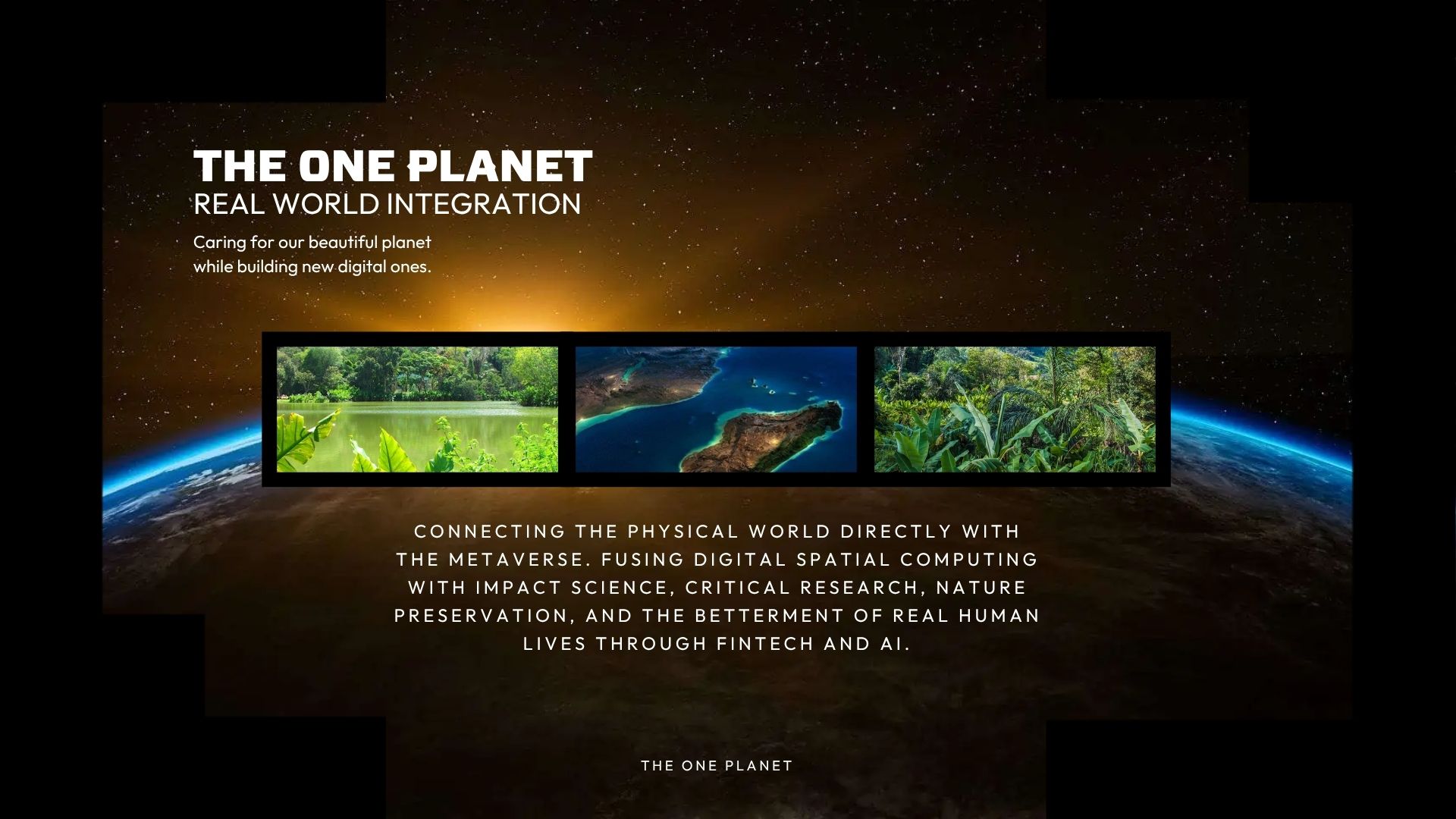
One Planet connects the digital system to physical assets and infrastructure. The white paper proposes tags that link real goods to blockchain records, Lightning payments for ecological sponsorship, factory digital twins and off-grid communities.
Madagascar is central to this section. AZTEQ says it has acquired 7,000 hectares for a zone that would use Bitcoin and AZTEQ One. The paper also discusses water systems and 400-megawatt small modular reactors. It does not include land records, permits, a construction schedule or operating evidence for those facilities. The document therefore supports describing the plan and the project's ownership claim, not treating the infrastructure as delivered.
One Planet broadens the meaning of participation. A supporter might sponsor a mapped ecological area with a Lightning payment. A business might connect a physical product or production line to a digital record. Those possibilities remain proposals in this white paper, and the practical terms are not yet specified.
AZTEQ One pays for activity inside the system
AZTEQ One is the utility coin for Avenge. Users would spend it on transactions, smart contracts, DDA updates, DKU storage, AI computing, private transfers and activity inside the virtual environments. The paper sets the cost of allocating one 512-kilobyte DKU at one AZTEQ One.
The supply is capped at 116 million coins. The allocation chart assigns 74% to the ecosystem and staking rewards, 18% to circulating supply and 8% to a multi-signature treasury. A separate table lists 21 million coins as circulating and 9 million in the treasury. That leaves 86 million for the ecosystem and rewards, which corresponds with the rounded percentages in the chart.
The proposed deposit and withdrawal rate is one AZTEQ One for 5,000 satoshis, equal to 0.00005000 BTC. Its value would therefore stay tied to a fixed amount of bitcoin under the proposed mechanism. Its value in euros or dollars would still move with bitcoin's market price.
The paper also says active balances would earn compounding yield funded through visitor fees and network-use burns. It does not provide a rate, formula or complete operating model. Nor does it explain the full redemption process, reserve custody, proof-of-reserves method, vesting schedule or the treatment of heavy withdrawals.
The white paper states that AMG Nederland BV holds 14,000 BTC and 5,000 kilograms of gold. No third-party audit appears in the document. That makes the reserve figures project statements rather than verified financial facts.
The white paper defines roles, but not an open route into them
A potential participant can use the paper to identify a place in the proposed network. A creator can see how a DDA might work. A developer can see where Move contracts and Virtua extensions fit. A venue operator can understand the intended footfall model. A business can see how AZTEQ wants to connect digital records with physical operations.
The document does not turn those roles into a public set of instructions. It provides no phased roadmap, component launch dates, validator hardware requirements, Life Title terms or token-acquisition process. It describes access as permissionless and also refers to identity and anti-money-laundering checks through Veriff, without mapping which activities would require verification.
Self-custody adds another practical responsibility. Users would control their own keys, and the legal section warns that a central administrator cannot recover lost keys. The paper also states that it is not financial, investment or legal advice.
AZTEQ has produced a detailed blueprint for a browser-based economy that joins virtual worlds, Bitcoin, AI and physical infrastructure. Its strongest idea is the separation of tasks: the browser renders the world, Avenge records its changing property, NOSTR carries identity, and Bitcoin and Lightning move value. That structure makes the project understandable even at its full scale.
Participation still depends on information outside this white paper. Prospective users need live access points. Builders need technical requirements. Businesses need terms, and anyone relying on the economic model needs evidence for reserves, redemption and performance. The white paper shows where people could fit. The next test is whether AZTEQ can turn those proposed roles into working, verifiable ways to join.